
Advanced 1 Bootcamp
Mastery Track - Level 15

Coach Shaun
What you will learn
Use probability modals and future perfect tenses to discuss possible future events, and outline the pros and cons of opportunities in written and spoken form.
Talk about the world and city life using gerunds, infinitives, and passive voice. Use causative structures and various conditionals to express complex ideas and discuss dilemmas.
Make polite requests, express gratitude, and write compelling content like travel blogs and complaint letters, using formal and neutral tones where needed.
Use conditionals to discuss hypothetical situations, criticize past actions, and reflect on choices. Write thoughtful argument articles and movie or program reviews that present both sides of an issue.
All courses operate on CET (Central European Time). Times are converted to your local time, but please be aware that time shifts in your region or CET during the Bootcamp may cause your session time to adjust. For example, a class starting at 6 a.m. could move to 7 a.m. if daylight saving time changes occur.
Course schedule
Unit 51 - What do you think?
Lesson 1 - Learn modals of probability (will, could, might, may, won't). Learn probability adjectives.
At the end of the lesson, students can use probability modals and adjectives to express possible future events.
Zoom
Unit 51 - What do you think?
Lesson 2 - Learn the future perfect simple and continuous. Learn by...[time reference].
At the end of the lesson, students can use the future perfect simple and future continuous to talk about predictions.
Zoom
Unit 51 - What do you think?
Lesson 3 - Learn to discuss advantages and disadvantages of something.
At the end of the lesson, students can talk about advantages and disadvantages of an opportunity, e.g., travel, job, etc.
Zoom
Unit 51 - What do you think?
Lesson 4 - Learn to write an argument article presenting both sides of a story, noting advantages and disadvantages of a topic. Practice using linking words in addition, as a result, on top of this, to conclude, personally.
At the end of the lesson, students can outline and write an argument article presenting support for and against a topic.
Zoom
Speaking Practice
Zoom
Unit 52 - The world
Lesson 1 - Expand understanding of infinitives and gerunds.
At the end of the lesson, students can use infinitives and gerunds with greater confidence.
Zoom
Unit 52 - The world
Lesson 2 - Learn and review passive voice with various tenses. Learn to use passive voice to make predictions.
At the end of the lesson, students can use the passive voice with various tenses. Students can make predictions about the world in 2050 using the passive voice.
Zoom
Unit 52 - The world
Lesson 3 - Learn helpful language to make requests, ask for favors, and express gratitude.
At the end of the lesson, students can make requests and ask others for favors, as well as express gratitude.
Zoom
Unit 52 - The world
Lesson 4 - Learn to write a travel blog post using descriptive language.
At the end of the lesson, students can use adjectives effectively to describe an interesting place they have traveled.
Zoom
Speaking Practice
Zoom
Unit 53 - City Life
Lesson 1 - Learn too, enough and not enough to describe problems. Learn so and such to emphasize something.
At the end of the lesson, students can talk about problems of city living using too, enough and not enough. Students can use so and such to put emphasis on something.
Zoom
Unit 53 - City Life
Lesson 2 - Learn causative structures with have and get.
At the end of the lesson, students can use have and get causative structures to talk about services someone else did for them.
Zoom
Unit 53 - City Life
Lesson 3 - Learn to make suggestions with could to show a future possibility and suggest + verb + -ing.
At the end of the lesson, students can make suggestions with could and suggest + verb + -ing in the context of city problems and making a case at a town meeting.
Zoom
Unit 53 - City Life
Lesson 4 - Learn to write a complaint letter, using a neutral tone and formal language.
At the end of the lesson, students can write an effective complaint letter regarding a 24-hour fast food store opening in the neighborhood.
Zoom
Speaking Practice
Zoom
Unit 54 - Is there always a good choice?
Lesson 1 - Review and learn zero, first, second conditional (including If I were you) and mixed conditionals.
At the end of the lesson, students can use a variety of conditionals in the context of talking about money.
Zoom
Unit 54 - Is there always a good choice?
Lesson 2 - Learn the third conditional, including past perfect continuous in the if clause. Learn should have + past participle to criticize others’ past actions.
At the end of the lesson, students can use the third conditional with greater confidence to talk about an imagined past. Students can use should have + past participle to criticize others’ past actions.
Zoom
Unit 54 - Is there always a good choice?
Lesson 3 - Continue practicing the third conditional and mixed conditionals.
At the end of the lesson, students talk about dilemmas using the third conditional and mixed conditionals.
Zoom
Unit 54 - Is there always a good choice?
Lesson 4 - Learn helpful language to write a review.
At the end of the lesson, students can organize and write a review for a movie or a program.
Zoom
Speaking Practice
Zoom

Your Path To English Fluency Starts Here - Invest in Yourself Today!
The Speak EnglishAccelerator Bootcamp
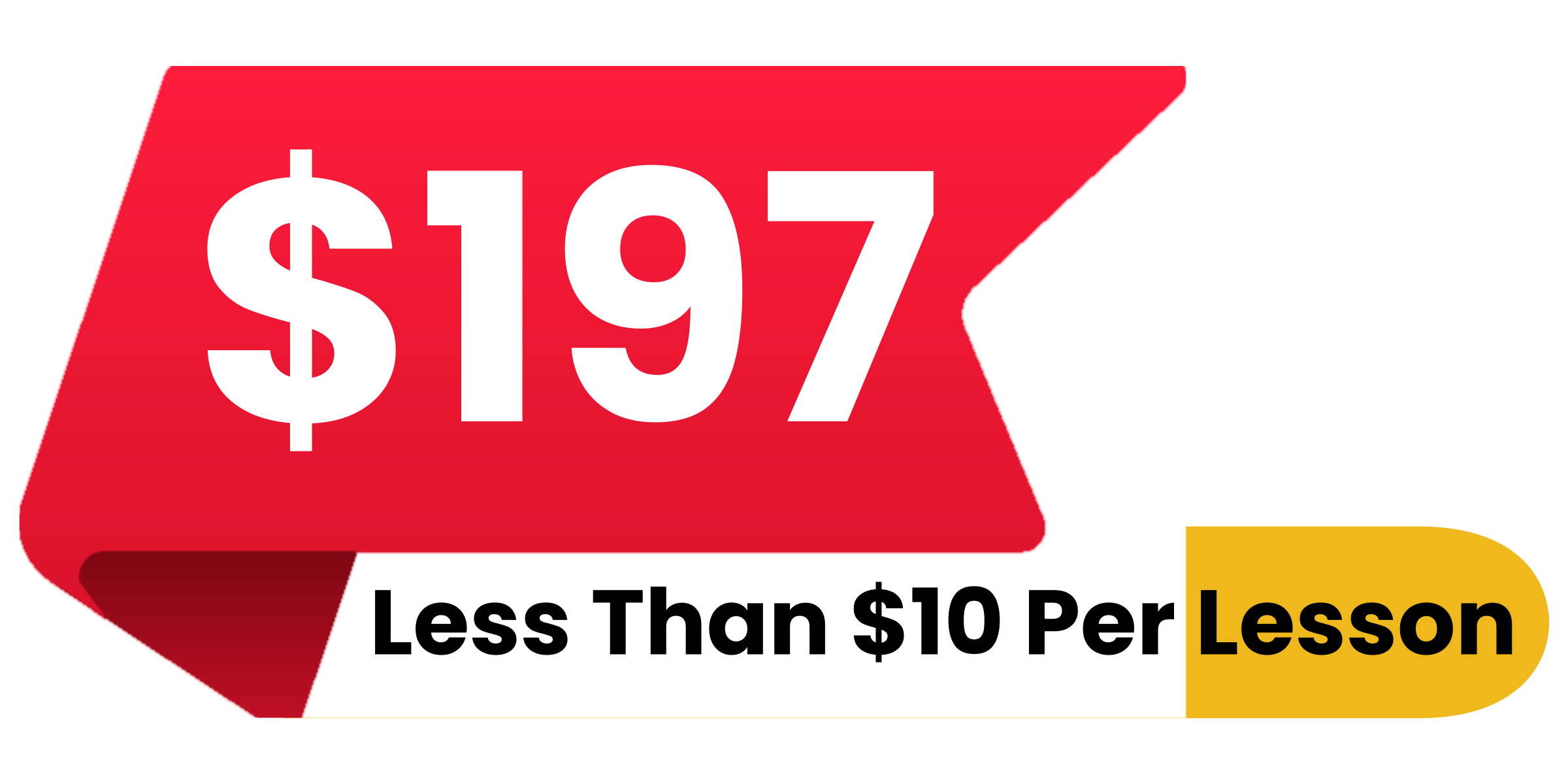
For a small investment of $197 for the entire 4-week Bootcamp, you’ll receive daily live instruction, personalized feedback, and a structured pathway to English fluency in a small-group environment.
20 live, small-group sessions focused on speaking and real-world skills
Weekly confidence-building practice speaking days
Direct access to your dedicated coach
Personalized homework feedback and comprehensive unit reviews
Certificate of completion
BONUS: Weekend Community Practice Opportunities
Investing in the Speak English Accelerator Bootcamp means investing in your future. Imagine the career advancements, social connections, and opportunities you could unlock by becoming fluent in English. This Bootcamp equips you with the skills and confidence to communicate freely in any English-speaking situation
Limited Spots Available: 5 per Bootcamp
Next Bootcamp begins January 6, 2025.
Registration deadline is December 29, 2024.