Intermediate 2 Bootcamp
Growth Track - Level 10

Coach Shaun
What you will learn
Use comparatives, superlatives, and structures like “used to” and “get used to” to talk about changes in habits and health, and write about successful achievements using sequence words.
Talk about art, literature, and music using the passive voice, use the present perfect with “for” and “since” to discuss interests, and write compelling reviews with contrasting details.
Use the first conditional to talk about potential outcomes, express displeasure or politely decline assistance, and write testimonials about experiences, using pronouns effectively.
Master the second conditional for giving advice, use structures like “too” and “not enough” to express complaints, and learn to make or resolve complaints in different settings, including writing formal or informal apology emails.
All courses operate on CET (Central European Time). Times are converted to your local time, but please be aware that time shifts in your region or CET during the Bootcamp may cause your session time to adjust. For example, a class starting at 6 a.m. could move to 7 a.m. if daylight saving time changes occur.
Course schedule
Unit 31 - Change
Lesson 1 - Learn and review further uses of comparatives and superlatives. Learn collocations with get.
At the end of the lesson, students can compare habits and situations in the past with habits and situations today. Students can use collocations with get to talk about change.
Zoom
Unit 31 - Change
Lesson 2 - Learn and review used to. Learn be used to and get used to. Learn further uses of comparatives and superlatives.
At the end of the lesson, students can use used to and the past simple to talk about change. Students can use a variety of comparative forms to say how things now are different from the way they used to be.
Zoom
Unit 31 - Change
Lesson 3 - Learn to talk about changes in health and symptoms.
At the end of the lesson, students talk about symptoms and changes to health. Students can suggest ways to resolve them.
Zoom
Unit 31 - Change
Lesson 4 - Learn to write about a successful achievement using linking words to begin with, next, after a while, soon, in the end.
At the end of the lesson, students can write about a decision to change and succeeding. Students can use linking words to show the order of events.
Zoom
Speaking Practice
Zoom
Unit 32 - Arts, music and literature
Lesson 1 - Learn the passive present simple and the passive past simple.
At the end of the lesson, students can talk about art, literature, and music using the passive voice.
Zoom
Unit 32 - Arts, music and literature
Lesson 2 - Learn present perfect with for and since. Learn since followed by past simple statements. Learn past statements with for.
At the end of the lesson, students can use the present perfect with for and since to talk about their interest in movies, literature, and art.
Zoom
Unit 32 - Arts, music and literature
Lesson 3 - Learn to make and accept excuses.
At the end of the lesson, students can make and accept excuses in an informal setting.
Zoom
Unit 32 - Arts, music and literature
Lesson 4 - Learn to write a review, using linking words to show contrast.
At the end of the lesson, students can write a book or a movie review, using contrast words to describe what they like and what they didn't like.
Zoom
Speaking Practice
Zoom
Unit 33 - What about you?
Lesson 1 - Learn the first conditional, positive and negative form.
At the end of the lesson, students can use the first conditional to talk about future possibilities.
Zoom
Unit 33 - What about you?
Lesson 2 - Learn verbs followed by infinitives or gerunds.
At the end of the lesson, students can use a variety of verbs followed by gerunds or infinitives to talk about things they have achieved or tried to achieve.
Zoom
Unit 33 - What about you?
Lesson 3 - Learn helpful language to express displeasure. Learn to politely refuse to offer assistance.
At the end of the lesson, students can express displeasure and role-play a resolution. Students can politely refuse to help someone solve a problem.
Zoom
Unit 33 - What about you?
Lesson 4 - Learn to share an opinion of a course someone is taking. Practice using pronouns to replace things already mentioned.
At the end of the lesson, students can write a testimonial of a course they are taking.
Zoom
Speaking Practice
Zoom
Unit 34 - If I were you...
Lesson 1 - Learn the second conditional. Learn differences in usage between second conditional and first conditional.
At the end of the lesson, students can use the second conditional to talk about how they would resolve certain dilemmas. They can differentiate between second and first conditional. Students can use If I were you to give advice.
Zoom
Unit 34 - If I were you...
Lesson 2 - Learn too and not enough.
At the end of the lesson, students can use too and not enough, using the structures for complaints and giving negative reviews.
Zoom
Unit 34 - If I were you...
Lesson 3 - Learn language to exchange goods and get a refund. Learn to make a complaint.
At the end of the lesson, students can make a complaint and return or exchange goods.
Zoom
Unit 34 - If I were you...
Lesson 4 - Learn to write an apology email. Learn to differentiate between formal and informal language.
At the end of the lesson, students can write an apology email, choosing appropriate level of formality for a situation.
Zoom
Speaking Practice
Zoom

Your Path To English Fluency Starts Here - Invest in Yourself Today!
The Speak EnglishAccelerator Bootcamp
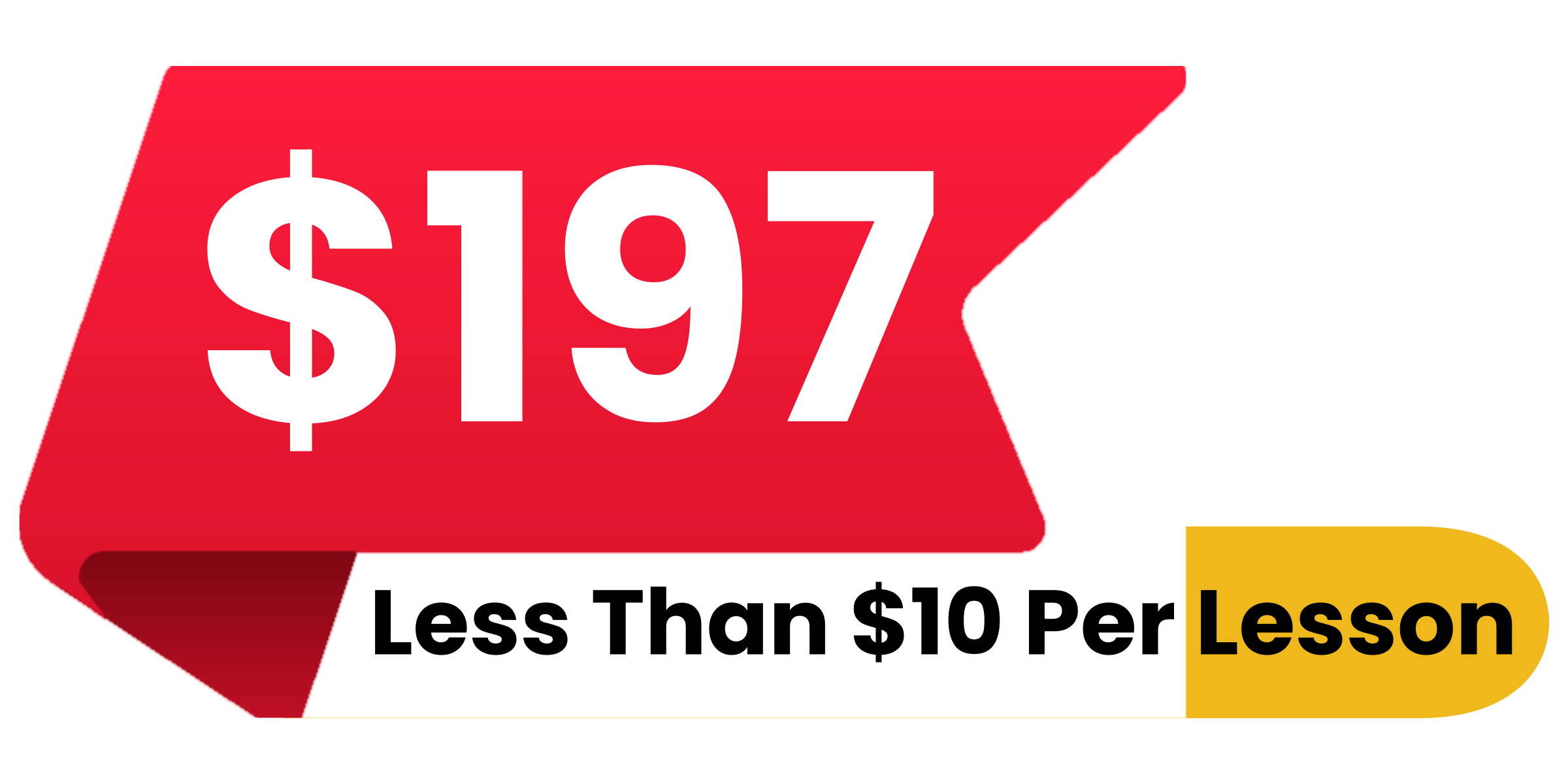
For a small investment of $197 for the entire 4-week Bootcamp, you’ll receive daily live instruction, personalized feedback, and a structured pathway to English fluency in a small-group environment.
20 live, small-group sessions focused on speaking and real-world skills
Weekly confidence-building practice speaking days
Direct access to your dedicated coach
Personalized homework feedback and comprehensive unit reviews
Certificate of completion
BONUS: Weekend Community Practice Opportunities
Investing in the Speak English Accelerator Bootcamp means investing in your future. Imagine the career advancements, social connections, and opportunities you could unlock by becoming fluent in English. This Bootcamp equips you with the skills and confidence to communicate freely in any English-speaking situation
Limited Spots Available: 5 per Bootcamp
Next Bootcamp begins January 6, 2025.
Registration deadline is December 29, 2024.